MKV is common in downloader workflows because it handles mixed streams and modern codecs well. The problem comes later: many Apple-centric tools, quick previews, and upload targets are happier with MP4. Converting the file on your Mac is the fastest way to improve compatibility without depending on a web converter.
Why downloaded videos often end up as MKV
Many sites provide separate video and audio streams. MKV is flexible, so download tools often use it when merging those streams. That is great for reliability, but not always ideal for final delivery or Apple-device playback.
How to convert MKV to MP4 on Mac
Add the MKV file to Convert
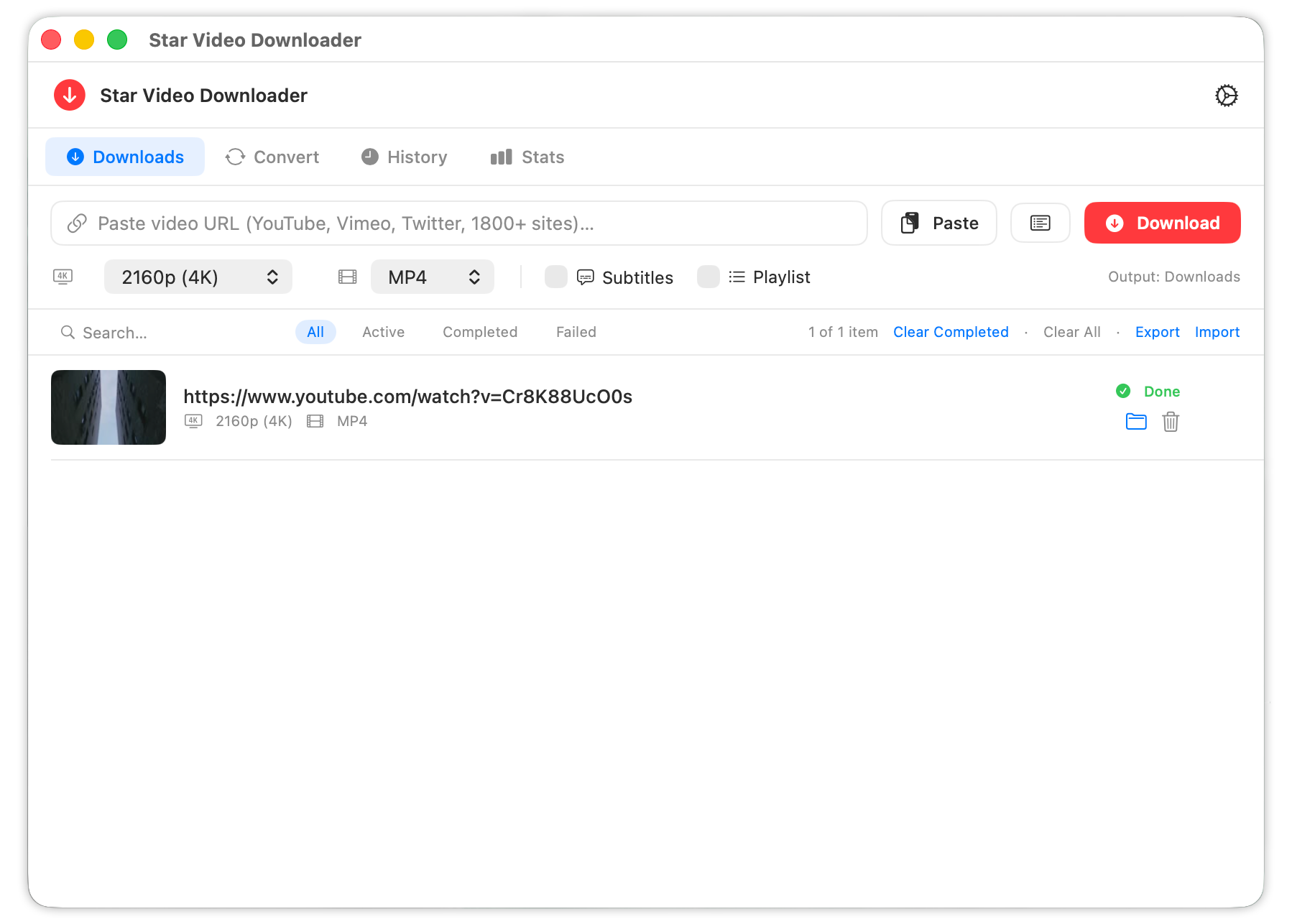
Open Star Video Downloader, switch to Convert, and drag the MKV file into the queue.
Choose MP4 and review the target
Select MP4, then confirm that the output makes sense for where the file will be used: QuickTime, phone playback, upload, or general sharing.
Convert, then test in Finder or QuickTime
Once the file is done, open it in the exact app or device flow that was causing problems before. This is the easiest way to confirm the compatibility issue is gone.
Best case: remux, not full recompression
If the MKV already contains MP4-friendly codecs, the converter may only need to remux the streams into a different container. That is faster and avoids unnecessary quality loss. Re-encoding only becomes necessary when the video or audio streams are not suitable for MP4 delivery.
Typical use case: You downloaded a video in MKV for reliability, but now you want to AirDrop it, upload it, or open it somewhere that expects MP4.
When to leave the file as MKV
- If the file is just for local archive storage.
- If your player already handles MKV well and you do not need to send it anywhere.
- If subtitles, chapters, or stream combinations work better in the original container.
Frequently asked questions
How do I convert MKV to MP4 on Mac?
Add the MKV file to the Convert tab, choose MP4, and run the job locally on your Mac.
Why do downloader apps create MKV files?
MKV is a flexible container for merged audio and video streams, which makes it convenient during the download stage.
Is MP4 better than MKV on Mac?
For compatibility, yes. MP4 is usually easier with QuickTime, iPhone, AirDrop, browsers, and upload tools.
Turn Downloaded MKV Files into Easier MP4 Deliverables
Keep the workflow local, test the result immediately, and avoid online file-size limits along the way.